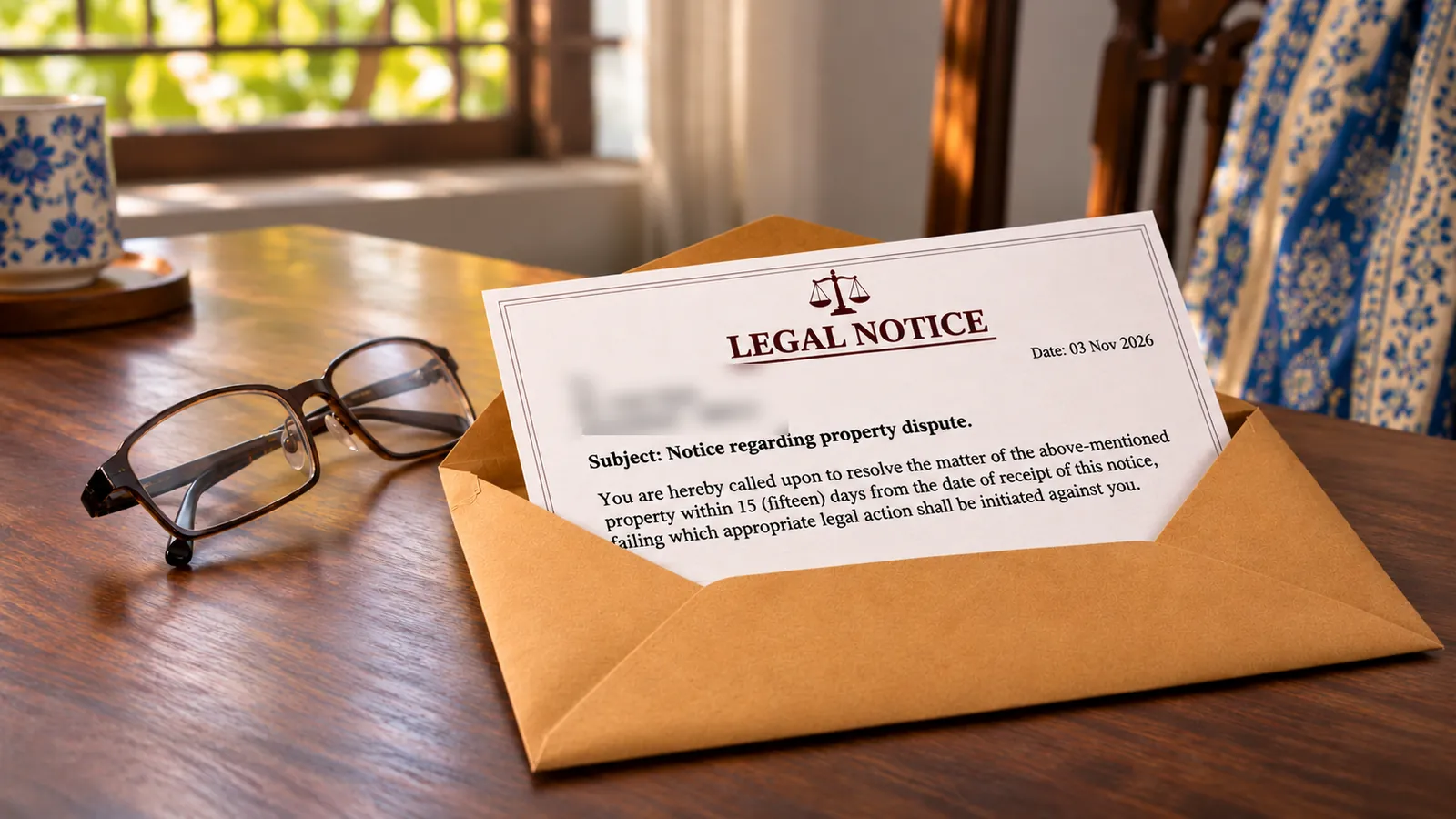
Received a notice? Do this
- Don't ignore it. Silence can be treated as accepting what it says.
- Note the date you received it and the time it gives you to reply.
- Don't call or message the other side in anger. Anything you say can be used.
- Don't sign anything they send along with it.
- Get a written reply sent through an advocate, on time, that answers each point and states your side.
Want to send a notice? A well-drafted notice states the facts, the legal basis, what you want and by when. Many disputes settle at this stage, before any case is filed. In cheque matters, a notice within a fixed time is compulsory before a case .
Common reasons for a notice: unpaid money or dues, cheque return, property or rent disputes, a breach of agreement, defamation, employment dues, consumer complaints, family matters.
Documents to keep ready
- The notice you received (with the envelope, which shows the date)
- Agreements, bills, receipts, messages related to the matter
- A short written timeline of what happened
Common questions
What if I don't reply to a legal notice?
It is not a crime, but in a later case your silence may be held against you. A reply records your side early.
Can I reply myself?
You can, but a careless reply can admit things that hurt you later. An advocate's reply is safer.
Can a legal notice be sent on WhatsApp or email?
Notices are usually sent by registered post or courier; electronic copies may also be sent. Proof of delivery matters.
Read the guide: Received a legal notice? 5 things to do, and 5 things not to do